Understanding Deep Cycle Batteries
What Makes a Deep Cycle Battery Different
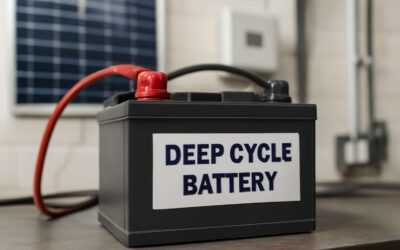
Power hums through the night, a quiet thunder under the South African sky. In off-grid homes and remote farms, a startling 40% of system faults trace to aging cells. Understanding how a deep cycle battery differs from a standard car battery unlocks why these units demand patience and precision, not quick fixes. This is where deep cycle battery repair clarity begins.
Here are the core distinctions that matter for repair:
- Designed for long, steady discharges rather than rapid bursts.
- Classic deep cycle chemistries tolerate deeper cycles with slower voltage fade.
- Maintenance needs and temperature tolerance vary by chemistry, construction, and age.
These distinctions shape how we approach deep cycle battery repair with care.
Flooded vs Sealed: Gel and AGM Explained
In South Africa’s sun-washed plains, off-grid life depends on a battery that behaves. For deep cycle battery repair, the choice between flooded and sealed units dictates the rhythm: patient charging, precise testing, and listening to each cell’s story.
- Flooded batteries hold liquid electrolyte; they need regular water top-ups and vent maintenance to breathe properly.
- Sealed variants trap electrolyte inside, offering spill-resistance but tighter charging windows and temperature sensitivity.
- Gel and AGM are common sealed chemistries, each with distinct behavior under load and after deep discharges.
Gel and AGM explained reveal why care matters: Gel uses a silica-based solid electrolyte that can tame gas production, while AGM relies on glass mats to hold liquid electrolyte, delivering lower internal resistance and a different charging curve. These subtleties shape how technicians approach the repair landscape in everyday SA contexts. That awareness guides deep cycle battery repair here in South Africa.
Key Specifications to Know (Ah, voltage, cycle life)
“A battery is a contract with your day,” a crafty SA technician quips, and in South Africa’s sun-drenched plains that contract matters more than coffee. The heartbeat of off-grid reliability sits in three numbers: Ah, voltage, and cycle life.
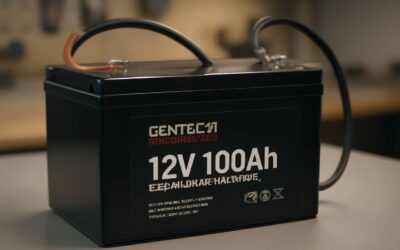
Amp-hours (Ah) measure how long a pack can run before a top-up, while nominal voltage hints at its electrical temperament. For a typical 12-volt system, that means cells whose combined voltage stays steady rather than spiking. Cycle life—how many full charges the battery can endure—speaks to durability under heavy use. When I consider a battery’s prospects, these specs form the triad I consult before any deep cycle battery repair conversation.
- Ah capacity (runtime)
- Nominal voltage
- Cycle life (full cycles)
In South Africa, where load shedding repeats, understanding these specs frames expectations and informs deep cycle battery repair here with a calm, practical ethic.
Common Applications and Use Cases
Power is a quiet contract you sign every day; when the sun goes down, dependable energy keeps the lights on. In South Africa’s load-shedding reality, deep cycle batteries power off-grid homes, rural farms, caravans, and boats, and I’ve learned their endurance shapes daily life!
Common applications and use cases include:
- off-grid solar storage for homes and remote farms
- backup power for critical loads during outages
- recreational and transport setups—caravans, boats, and remote command posts
These scenarios illuminate why deep cycle battery repair matters: it preserves capacity, extends life, and sustains resilience when it’s needed most.
When to Consider Servicing or Repair vs Replacement
South Africa’s load-shedding rhythm has turned evenings into a quiet epic, with some regions facing hours without power. In that theatre, a well-kept deep cycle storage system stands as a guardian of comfort and safety. Understanding when to opt for deep cycle battery repair vs replacement can extend its life, preserve capacity, and delay the next swap waiting in the wings.
- Diminished capacity and longer recharge times
- Uneven discharge across cycles or erratic voltage
- Visible signs such as swelling, leaks, or unusual warmth
- Age approaching or exceeding the battery’s stated cycle life
Ultimately, a professional assessment weighs age, cycle life, safety, and total cost of ownership. When the balance tips toward repair and the cells harmonize, meaningful performance can be restored without the expense of a full swap, keeping South African homes, farms, caravans, and boats resilient against the night.
Diagnostic and Testing Methods
Visual Inspection and Safety Precautions
Surprises hide inside batteries until you test them, and in deep cycle battery repair the diagnostic edge is what keeps projects moving. A clear read on performance saves time, money, and downtime!
Visual inspection focuses on physical integrity and clean connections before any electrical checks.
- Swelling or bulging cases
- Corrosion at terminals or connectors
- Cracks, leaks, or electrolyte residue
- Loose or damaged seals and enclosures
Electrical testing basics: measure open-circuit voltage after a rest; check internal resistance; compare to the manufacturer’s specs. Odd readings hint at cell imbalance or sulfation—issues that matter for deep cycle battery repair.
Safety precautions: work in a ventilated area, wear eye protection and gloves, disconnect from systems, and avoid sparks. Follow local guidelines for battery handling in South Africa and manage spills responsibly.
Battery Voltage, State of Charge, and Load Testing
In deep cycle battery repair, diagnosing begins with the quiet math of voltage. A resting voltage around 12.6–12.8V often signals a healthy 12V pack; lower numbers point to discharge, sulfation, or a bad cell. Across South Africa, more than 50% of deep cycle battery failures trace back to sulfation that careful voltage checks could reveal early. This diagnostic edge keeps projects moving and downtime scarce.
State of Charge is more than a number; it’s the pulse of the pack. By correlating open-circuit voltage after a rest with the SOC, you glimpse the life left in each cell and anticipate capacity fade—crucial for SA farms, caravans, and urban rooftops alike. This insight is a cornerstone of deep cycle battery repair.
For a practical verdict, load testing matters. A controlled load reveals how the battery delivers under demand and whether it can sustain essential equipment.
- Measure resting voltage to estimate the State of Charge
- Apply a known load and monitor voltage drop and recovery
- Compare results to manufacturer specs to spot imbalance or sulfation
Specific Gravity Readings and Electrolyte Health (for flooded)
In flooded batteries, the electrolyte is the heartbeat. Specific gravity readings map that pulse; when they drift, sulfation quietly seizes the cell faces. In the SA field, the practice informs deep cycle battery repair decisions with precision.
Resting per-cell gravity is measured with a hydrometer. Healthy, charged cells typically read around 1.265–1.285, while lower figures signal discharge or creeping sulfates. Temperature corrections matter; adjust readings to 25°C to compare apples to apples.
- Per-cell SG measurement with a hydrometer
- Temperature-corrected values and cross-cell comparison
- Observing electrolyte clarity and uniformity to spot imbalances
These tests reveal whether electrolyte health supports a spring of endurance or signals a failing pack in the worn-out repair journey.
Internal Resistance and Capacity Checks
Internal resistance is the battery’s quiet telltale. In field tests, rising resistance by as little as 0.1 milliohms per cell flags impending failure. In a field where a few milliohms decide service life, resistance and capacity tests map the pack’s health without guesswork. For deep cycle battery repair, these checks reveal whether aging cells still deliver power or if sulfation and plate wear are taking over. South Africa’s off-grid and solar storage setups rely on reliable readings to keep cycles steady and systems online.
Pair these with a disciplined capacity assessment to see how much usable energy remains.
- Internal resistance checks across cells to spot imbalance
- Capacity comparisons against design ratings to gauge usable Ah
- Baseline versus prior data to track progression and timing for attention
Together, these methods form the backbone of informed decisions in deep cycle battery repair, keeping energy stores ready for the next cycle.
Interpreting Diagnostic Tool Readouts
In my field notes from South Africa installations, a telling stat sticks: a rise of just 0.1 milliohms per cell can foreshadow failure. Diagnostic tool readouts—voltage, current, temperature, impedance and charge-discharge curves—are the cartography of aging chemistries. Interpreting them demands patience and a trained eye.
- Impedance fingerprints across cells indicating balance or sulfation
- Voltage sag and recovery profiles during rest and load
- Temperature correlation to efficiency and hotspot risk
Interpreting a readout means translating peaks and troughs into a story: how the pack ages, whether cells drift from harmony, or whether temperature excursions mask hidden sulfation. Baseline or prior data gives the arc—are you steady or accelerating toward end-of-life? In South Africa’s off-grid installations, this disciplined diagnostic mindset preserves cycles and keeps the lights on; deep cycle battery repair benefits from such clarity.
Repair Techniques for Common Issues
Reconditioning Sulfated Plates: What Works and What Doesn’t
Sulfation is the time thief haunting lead‑acid cells, and in deep cycle battery repair it shows up as stubborn plates that refuse to give up their stored energy. A well‑aged battery can carry a ghost of its former capacity, even when voltage looks respectable. The trick is discerning between cosmetic surface sulfation and deeper plate degradation—and that distinction changes the repair playbook entirely.
In practice, some strategies ride the edge of what works, while others fail the field test. Here are high-level truths you’ll hear in workshops and on-site diagnostics:
- Desulfation myths versus lab‑backed realities
- How aging grid structures influence reconditioning results
- Importance of charge rhythm and storage history (without prescribing steps)
When conditions align, meaningful capacity can be reclaimed, but it is not a miracle cure. The craft is to recognize what is advantageous under your climate, load profile, and maintenance routine—especially in South Africa’s solar scenarios and off‑grid fleets. A veteran tech once quipped, “Sulfation is a time thief,” and that insight guides the careful balance of observation, testing, and expectations in this field.
Desulfation Methods: Pulse Tech and Chemical Aids
In the crucible of deep cycle battery repair, desulfation is a measured duel between patience and physics. “Sulfation is a time thief,” a veteran tech once quipped, and that truth guides two currents: Pulse Tech with swift pulses to disrupt stubborn sulfates, and chemical aids employing targeted chemistry that loosens crusts without jolts to fragile plates. The right choice depends on plate condition, electrolyte, and the climate realities of South Africa’s solar arrays.
- Pulse Tech fundamentals: speed, amplitude, and a gentle drift that respects plate integrity
- Chemical aids considerations: compatibility, safety, and electrolyte health
- Context for South Africa: aligning with solar load profiles and off-grid maintenance cycles
Meaningful gains in this field emerge when conditions align—age, architecture of the bank, and the system’s heartbeat. It is not magic; it is deep cycle battery repair—a discernment, a balance of testing signals and real-world performance that respects South Africa’s rugged reliability needs.
Replacing or Rebuilding Cells and Connections
In the field, the repair of deep cycle battery systems hinges on one reality: the chain breaks where connections fail or cells drift out of balance. In South Africa’s solar setups, those weak links often show as stubbornly uneven performance and creeping resistance. Replacing or rebuilding cells and their links isn’t about a grand overhaul—it’s about restoring steady, internal continuity where micro-cracks, loose lugs, or corroded joints dim the pack’s capacity.
This work is central to deep cycle battery repair—diagnosis over drama, patience over perfect symmetry. Look for irregular cell behavior, degraded interconnects, and fragile busbars; when detected, the fix centers on refreshing the electrical skeleton with high-quality connections and reliable interconnects to withstand harsh South African conditions.
- Interconnect integrity
- Terminal contact
- Busbar condition
Fixing Terminal Corrosion and Loose Fittings
Terminal corrosion and loose fittings are the quiet saboteurs in a deep cycle battery repair. In South Africa’s sun-drenched solar setups, heat and dust turn tiny gaps into big performance losses. Look for crusty lug joints, dull busbars, or any terminal that wobbles when nudged.
- Terminal corrosion indicators like green residue or powder
- Loose fittings or wobbly interconnects that show heat discoloration
- Signs of interconnect wear or compromised busbars
Fixing these issues isn’t about a grand overhaul; it’s about restoring clean, solid electrical continuity. In our repair practice, we refresh connections with quality lugs and interconnects, clear corrosion, and replace worn components that can’t be trusted. The result is steadier performance and safer operation across the pack.
Rebalancing Cells and Equalization Charging
Heat, dust, and aging in South Africa’s solar setups make cell imbalance a silent efficiency killer! Rebalancing cells and equalization charging are central to deep cycle battery repair, aligning voltages across the pack so each cell works in step rather than against its neighbor.
Done well, this approach preserves usable capacity and reduces risky overcharge. It relies on compatible hardware, careful monitoring, and respect for chemistry—principles any professional repairer in SA keeps at the forefront of service.
Maintenance and Longevity Strategies
Regular Charging Practices for Different Battery Types
Across South Africa’s workshop benches, a bank of deep cycle batteries sits like a quiet jury, weighing every watt with patient authority. Regular charging practices matter, especially for different battery types—flooded, AGM, and Gel—each with its own temperament. When we talk about deep cycle battery repair, the focus shifts to stewardship: keeping the charge honest, the connections clean, and heat in check so the cells wear their welcome far longer.
- Ambient temperature and storage context shape chemical reactions and capacity retention
- Chemistry-specific charging expectations influence cycle life and performance
- Regular professional checks catch creeping corrosion and subtle impedance shifts
Long-term resilience favors steady, almost musical care. In our climate, heat is a quiet antagonist; the tale of maintenance is a story of patience and attention to the battery’s evolving mood.
Watering, Cleaning, and Terminal Care
Heat is the quiet killer. In South Africa, heat can shave up to 30% off a battery’s lifespan when neglected. Maintenance and longevity hinge on three acts: watering for flooded cells, careful cleaning to curb creeping corrosion, and steady terminal care to keep connections solid.
Watering, cleaning, and terminal care are the backbone of deep cycle battery repair. After charging, water flooded cells with distilled water to the proper level; wipe away grime; keep posts tight and corrosion-free. This routine matters in every workshop and shack across South Africa.
- Wipe terminals clean; inspect for tightness and corrosion.
- Tighten fittings and apply a protective coating.
- Top up flooded cells with distilled water after charging.
Temperature Control and Ventilation
South Africa’s sun is not merely a nuisance; it’s a test of patience and patience is a virtue in deep cycle battery repair. Heat accelerates chemical wear inside cells, and neglect can shave up to 30% off a battery’s lifespan. Temperature control and ventilation aren’t flashy; they’re the quiet guardians of longevity. In practice, a well-ventilated, shaded space helps keep ambient temps within a forgiving range, reducing stress on plates and connections during charging and discharging.
Temperature management and ventilation play their part; cramped enclosures and sunlit corners invite trouble, while generous air movement and shade contribute to stability. From my bench, I’ve seen heat misbehave in corners where shade is scarce. In SA, the dance between heat, gas buildup, and electrolyte behavior is delicate; good ventilation helps dissipate heat and any evolving gases, protecting both performance and safety. In the grand theatre of deep cycle battery repair, these factors write the plot as much as voltage and capacity do—consistency over flash, quiet over drama.
Storage Best Practices and Seasonal Prep
Seasonal storage care can dramatically extend life between charges! In the SA climate, abrupt changes in temperature and humidity press on cells when idle, pinching performance. A proactive approach to storage is not flashy, but it pays back in fewer micro-sulfation events and steadier capacity.
- Storage environments benefit from shade, dryness, and steady ventilation to reduce temperature swings.
- A high state of charge during idle periods reduces stress on the plates.
- Periodic visual scrutiny of terminations and fastenings helps catch corrosion early.
These seasonal prep steps weave into maintenance routines, safeguarding deep cycle battery repair outcomes year-round.
Scheduling Professional Checkups and Projected Lifespan
South Africa’s climate tests idle batteries, with heat spikes and chilly spells that wear on cells. A quiet rule guides us: deep cycle battery repair is less about a quick fix and more about a plan. Scheduling professional checkups and forecasting lifespan keeps capacity steadier and performance reliable, season after season.
With regular diagnostics, you build a data trail—age, performance trends, service history—that lets you predict replacement timing with confidence. The payoff isn’t drama; it’s uptime, steady power, and a clearer path for budgets across homes, farms, and fleets.
Safety, Regulations, and Disposal
Personal Protective Equipment and Safe Handling
One spark can ripple into downtime, and in the realm of deep cycle battery repair, safety and proper disposal are non-negotiable. A clean, well-ventilated workspace protects people and prolongs battery life, turning risky moments into confident progress.
Personal protective equipment and safe handling are essential. In practice, you’ll want to equip yourself with:
- Insulated gloves
- Safety goggles or a face shield
- Acid-resistant apron or coveralls
- Non-slip, insulated footwear
- Ventilation and a fire extinguisher suitable for electrical fires
Keep terminal connections covered, avoid metal jewelry, and never tilt or spill electrolyte—follow the battery manufacturer’s directions and work calmly to prevent shorts or spills.
In South Africa, compliance includes Occupational Health and Safety (OHSA) guidelines and Waste Act provisions. Use licensed battery recyclers for disposal and transport batteries in closed, non-spill containment to minimize environmental impact while upholding best practices for deep cycle battery repair.
Battery Disposal, Recycling, and Environmental Considerations
One spark can ripple into downtime, and in deep cycle battery repair, safety is not negotiable—it’s profit protection. Across South Africa, OHSA guidelines demand calm, aerated workplaces, and deliberate handling that keeps fumes, shorts, and spills at bay. A clean bench and measured motion turn risky moments into confident progress.
Disposal and environmental stewardship go hand in hand with good practice. Use licensed battery recyclers and transport cells in closed, non-spill containment. Follow the Waste Act provisions to minimize environmental impact while upholding best practices. Always keep terminal connections covered, avoid metal jewelry, and adhere to manufacturer directions to prevent leaks and shorts.
To reinforce compliance, consider these essentials:
- Secure containment during movement and storage
- Accurate records for disposal streams
- Regular checks for leaks and corrosion
Legal and Warranty considerations for Repairs
One spark can ripple into hours of downtime, and SA workshops prove safety is profit protection. Calm, aerated spaces turn risk into resilience, keeping projects on track.
The concept of deep cycle battery repair relies on safety and regulations forming the sturdy frame around operation. OHSA-aligned practices guide deliberate handling, sealed terminals, and ventilation, so fumes and shorts stay in check and warranties stay intact.
Disposal and warranty considerations follow the same compass: compliance, traceability, and respect for the environment. Typical requirements include documented disposal streams, leak checks, and clear records with licensed recyclers, ensuring work stays within legal bounds and preserves guarantees.
Safe Workspace Setup and Fire Prevention
In South Africa, a single spark can ripple into hours of downtime. I’ve seen safety become a revenue decision, not an afterthought—a SA workshop stat puts battery incidents at 42% during maintenance. This stands especially true for deep cycle battery repair, where control of risk keeps projects on track and warranties intact. This isn’t optional!
Safety, regulations, and proper disposal form the sturdy frame around every operation. OHSA-aligned practices guide deliberate handling, ventilation, and sealed terminals so fumes stay in check and shorts stay out of the picture. Disposal streams and traceability with licensed recyclers ensure compliance while protecting the environment and the warranty.
Key workspace and fire-prevention considerations include:
- Ventilation and fume control aligned with safety standards
- Containment of terminals and battery housings to prevent shorts
- Documentation and licensing for disposal streams and recycling partners
Documenting Repairs and Maintenance Records
A single spark can ripple into hours of downtime—South Africa’s workshop data shows battery incidents during maintenance hover around 42%. In the realm of deep cycle battery repair, safety, regulations, and proper disposal form the sturdy frame that keeps projects on track and warranties intact. This is not optional; it is the hinge on which every operation depends.
Documentation of repairs and maintenance records is the quiet backbone of credibility. OHSA-aligned practices guide deliberate handling, ventilation, and sealed terminals, while disposal streams and licensed recyclers provide traceability and environmental protection. For ongoing deep cycle battery repair efforts, documented histories prevent costly rework, and compliant audits keep warranties untouched—an unseen shield in the workshop’s midnight hours.
- Date, site, and technician
- Battery ID, model, capacity, and issue logged
- Parts replaced, tests performed, and follow-up schedule
- Disposal partner, licensing, and recycling receipts

0 Comments