Understanding Your Power Storage Needs
Defining the Role of Deep Cycle Batteries
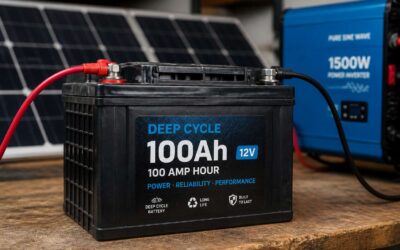
Load shedding has a way of forcing clarity. When the grid drops, you discover what your home truly needs to keep running. The 100ah deep cycle battery stands as a specific answer to that question, not a generic one. It represents a measure of stored energy for specific devices, like a refrigerator, internet router, or a security system. A standard car battery cannot perform this duty because it delivers a short, powerful burst. A deep cycle battery releases energy steadily over a prolonged period.
This difference shapes how you plan your power backup. Deep cycle batteries are built to withstand repeated discharges of up to 80% of their capacity. This resilience makes them a reliable backbone for an off grid solar setup or an inverter system. Before you purchase, calculate the total wattage of the appliances you intend to power.
Consider your daily routines and which comforts are non negotiable. Your usage patterns determine if a single unit is sufficient or if you need a larger bank. Also, account for the available charging source, whether from solar panels or municipal supply, as this affects the battery’s lifespan and performance. These factors are more important than the brand name. They define the true value of your investment in energy independence.
Key Differences Between Starting and Deep Cycle Batteries
Your power storage needs reveal themselves in the quiet hours. A standard starting battery delivers a sudden surge to crank an engine. It empties quickly. A deep cycle battery, however, offers a steady current over hours, matching the rhythm of a refrigerator or a Wi-Fi router. The distinction lies in construction. Starting batteries feature thin plates for rapid discharge. Deep cycle batteries use thicker plates to endure repeated drains.
- Starting battery: high burst, shallow discharge, short lifespan under load.
- Deep cycle battery: sustained output, 80% depth of discharge, built for cycles.
When I calculate my backup needs, I measure wattage and hours. A 100ah deep cycle battery provides a specific energy reservoir. Knowing this difference prevents overspending on the wrong technology.
Calculating Your Daily Amp-Hour Requirements
A 100ah deep cycle battery holds 1,200 watt-hours of energy at 12 volts. That finite reserve demands precise calculation. In South Africa, where grid failures are routine, one missed appliance can drain it before sunrise.
Calculate your requirement by listing every appliance you intend to support. Then do the math:
- Multiply each device’s wattage by its daily running hours.
- Add the totals to get watt-hours per day.
- Divide by your system voltage, typically 12V, to obtain amp-hours.
That final figure tells you how many cycles your battery can realistically sustain. A typical household using 600 watt-hours daily demands 50 amp-hours, leaving comfortable reserve.
Evaluating Voltage and Capacity Considerations
In a country where the lights flicker without warning, understanding your power storage is not a luxury; it is a quiet act of defiance. When evaluating a 100ah deep cycle battery, voltage and capacity are twin pillars of the same decision. Capacity alone tells you how much energy is stored, but voltage determines how efficiently that energy reaches your appliances. A 12V system suits small households, yet running longer cables demands higher voltage to prevent losses. Consider these points when sizing your bank:
– Voltage drop over distance can rob power; 24V or 48V systems reduce current and waste.
– Capacity under load changes with temperature; a cold night shrinks usable amp hours.
– Inverter efficiency typically runs 85% to 95%; factor that into your real reserve.
Matching voltage to your daily rhythm ensures your 100ah deep cycle battery serves without drama. It is not about storing more; it is about storing wisely.
Identifying the Right Battery Type for Your Off-Grid Setup
Your power storage needs are unique to your home and habits. Before selecting a 100ah deep cycle battery, audit your daily rituals. Which appliances demand simultaneous power? How long do you expect to run them during a blackout? This assessment reveals your true energy requirement, not a theoretical number!
I have found that battery chemistry matters as much as capacity. Lithium iron phosphate offers deeper discharge cycles, while AGM lead-acid tolerates colder temperatures. For South African conditions, consider:
- Cycle life: how many charge and discharge cycles you expect
- Depth of discharge: the percentage you can safely use
- Charge time: how quickly you can refill during daylight hours
Each 100ah deep cycle battery behaves differently under these variables. Matching the type to your load profile ensures your off-grid setup remains resilient when the grid falters.
Exploring Chemistry and Construction
Flooded Lead-Acid Batteries: Pros and Cons
Over 90% of lead-acid batteries get recycled, and that circular economy explains why the flooded type still dominates. When I talk to solar installers in Johannesburg, they often recommend the 100ah deep cycle battery because it absorbs punishment. The chemistry is straightforward: discharge converts lead dioxide and sponge lead into lead sulfate, and charging reverses that process. The plates are thick, the separators are cheap, and the sulfuric acid has no hidden tricks.
The construction, however, has trade-offs. Flooded cells need ventilation because they vent hydrogen and oxygen during charging. They also need distilled water, since electrolysis slowly depletes the electrolyte. The vents are open to the atmosphere, so you must check levels monthly.
- You get lower initial cost and high surge current.
- You accept regular maintenance and careful placement.
That last point matters. A sealed valve-regulated unit allows any orientation, but a flooded battery demands upright positions. The weight alone, often over 30 kilograms for a 100ah deep cycle battery, limits your mounting options. That is a serious consideration for any off-grid rig!
AGM vs. Gel Batteries: Which Is Superior?
AGM and gel batteries share a sealed valve-regulated design, but their chemistry holds the electrolyte differently. AGM uses absorbent glass mats, thin fiberglass sheets that keep acid in contact with the plates. Gel suspends the electrolyte as a thick paste. For a 100ah deep cycle battery, this changes the operating character. AGM delivers high surge current and recharges quickly. Gel endures heat and deep discharge without losing capacity. I have watched gel units hold up through Western Cape summers while AGMs strained. The trade-offs are straightforward:
- AGM: faster recharge, lower internal resistance, strong for inverter loads.
- Gel: better heat tolerance, gentler discharge curve, forgiving on deep cycles.
Choosing between them means matching the chemistry to your environment.
Lithium-Based Options and Their Charging Advantages
Lithium brings a silent chemistry to the 100ah deep cycle battery. Ions cross a solid membrane without the chaos of liquid acid, leaving no sulfation behind. This construction endures where lead-acid weakens.
- Charging acceptance rises sharply, so solar panels finish their work sooner.
- Discharge voltage stays flat, delivering steady power until the end.
- Weight falls to a third, yet cycle life extends far beyond lead-acid.
I have watched lithium cells accept partial charge states that would strain any AGM or gel unit. They charge faster, waste less heat, and rest for months without losing potency.
The Impact of Plate Thickness and Build Quality
Plate thickness determines how a 100ah deep cycle battery survives off-grid life in the Karoo. Thick plates resist corrosion and shedding, while thin plates give up after a few deep discharges. I have pulled apart tired batteries and seen the difference clearly. Build quality governs everything else, from the seal around the terminals to the internal bracing that stops vibration damage.
Here is what separates a durable unit from a disposable one.
- Positive grid alloys with antimony or calcium
- Separators that hold acid without drying out
- Cast terminals instead of pressed ones
A well built unit should feel heavy and solid. That weight comes from honest materials, not clever marketing.
Understanding BMS and Internal Protection Features
The batteries we prize for their endurance hide a complex interior, a silent vault where chemistry and construction determine fate. Inside each 100ah deep cycle battery, a careful alchemy unfolds, balancing the energy density of its active materials against the structural integrity of its lead plates. The electrolyte, a liquid conductor of potential, must be held in perfect suspension. This is not mere assembly; it is a calculated coexistence of elements that, when balanced, offer years of service, and when disturbed, fail without warning.
It is the BMS, or battery management system, that stands sentinel over this chemical reaction. This silent watcher monitors voltage, temperature, and current, intervening when the internal balance tips toward danger. A robust BMS is the line between a safe, long-lived unit and a volatile one. The internal protection features act as a final bulwark against the harsh realities of the bush, guarding against short circuits and overcharging. Consider the quiet safeguards operating within the casing:
– Voltage monitoring that prevents over-discharge, a common end for many units.
– Thermal sensors that detect overheating and reduce charging current.
– Short circuit protection that halts current flow instantly when a fault occurs.
Without these protections, a 100ah deep cycle battery is vulnerable, its chemistry turning against itself in a slow, internal corrosion. The construction, therefore, is a marriage of raw materials and electronic oversight. A thick-walled case resists the swelling that comes with heat, while the internal bracing prevents the plates from shifting. This is where durability is forged, far from the marketing brochures, in the patient architecture of the design itself. The true character of the battery emerges not under a gentle trickle charge, but in the relentless heat of a summer in the Karoo, where every component is tested, and only the genuinely well made survive the ordeal.
Comparing Cycle Life Across Different Chemistries
Cycle life is the battery world’s social currency, a figure owners brandish with a certain varnish of pride. Yet the number is not a universal constant. A 100ah deep cycle battery can deliver wildly different performances depending on the chemistry at its core.
Flooded lead-acid, for instance, may offer 500 cycles at 50% depth of discharge. AGM is similar, perhaps slightly higher. Lithium iron phosphate, meanwhile, often quotes 3,000 cycles or more. That difference is not academic; it changes the long-term cost per use.
Consider the typical cycle counts:
– Flooded lead-acid: around 500 cycles
– AGM: around 600 cycles
– Lithium LiFePO4: up to 5,000 cycles
The construction follows suit. Lead plates must physically endure erosion. Lithium cells rely on a more stable chemical lattice. Choosing a 100ah deep cycle battery is an exercise in generational arithmetic, not a mere upfront purchase.
Applications and Integration
Solar Energy Storage for Homes and RVs
South Africa’s solar rollout is accelerating, yet many households overlook storage. A 100ah deep cycle battery integrates neatly with rooftop PV arrays, keeping evening loads off the grid. For RVs, this capacity powers LED lighting, a 12V fridge, and device charging overnight.
When integrating, consider:
- Mounting orientation and ventilation clearances
- Charge controller compatibility
- Cable sizing to limit voltage drop
Each installation differs, but the principle holds: daily consumption must match solar yield and battery capacity. The battery stores the day’s extra generation for use after sunset, whether you are parked in the Karoo or running a suburban home.
Marine, Trolling, and Boat Electrical Systems
Salt air corrodes more than metal; it undermines confidence in electrical systems. A 100ah deep cycle battery earns its place on a boat by handling trolling motor draw and onboard electronics without the voltage sag that leaves anglers drifting in silence. Marine installations demand robust terminals and secure mounting, because wave action tests every connection.
Skippers typically rely on it for:
- trolling motor bursts across multiple fishing sessions
- fish finders, GPS plotters, and VHF radios
- bilge pumps and navigation lights running overnight
The integration works when you size the cable correctly and isolate the house bank from the starting battery. A 100ah deep cycle battery accepts charge from the alternator during transit and releases it steadily when the engine is off. In South African waters, from the Breede River to offshore tuna grounds, this capacity keeps the boat functional without shore power.
Off-Grid Cabin and Emergency Backup Scenarios
Off-grid cabins ask for quiet endurance. A 100ah deep cycle battery delivers that when solar panels go dormant after sunset. I have watched one power a small fridge, router, and water pump for an entire evening, then wake up ready for another charge cycle.
For emergency backup scenarios, the same battery steps in during load shedding. It keeps a CPAP machine running, charges phones, and holds a modem alive through extended outages. That is real resilience.
- LED lighting for three rooms
- Security system sensors
- Portable medical equipment
Pairing it with a modest inverter turns a 100ah deep cycle battery into the backbone of a temporary home power setup.
Pairing Batteries with Inverters and Charge Controllers
Integration decides whether a 100ah deep cycle battery performs or fails. I have watched mismatched components drain a battery in hours. The inverter must handle surge loads, while the charge controller regulates current to prevent overcharging.
For South African setups, pair this battery with an MPPT charge controller when solar input varies. A PWM unit works for smaller panels. The system also needs:
- Cables thick enough to minimize voltage drop
- A battery monitor to track state of charge
- Correct fuse ratings for safety
Match every component to the 100ah deep cycle battery’s discharge and absorption limits. That alignment turns a simple battery into a reliable power source.
Wiring Multiple Batteries in Series or Parallel
One 100ah deep cycle battery covers modest loads. A refrigerator and a few lights. When the system grows, you wire additional batteries together. Series connections raise voltage above 12V for certain inverters. Parallel connections keep 12V and increase capacity for longer runtime. South African households often prefer parallel banks because most inverters accept 12V input.
Wiring multiple units demands discipline:
- Identical voltage and capacity across all batteries.
- Interconnecting cables cut to the same length.
- Load connections placed diagonally across the bank.
- Monthly inspection of every terminal for corrosion.
Each connection adds resistance. I have seen a loose lug generate enough heat to melt insulation. That heat degrades battery chemistry. Thermal checks catch hot spots before failure. The 100ah deep cycle battery performs when the entire bank works as one unit. A weak cell drags down the whole bank.
Charging and Maintenance Best Practices
Selecting the Correct Charger Profile
The quickest way to ruin a 100ah deep cycle battery is to charge it with the wrong profile. Most standard chargers assume a starting battery, which means they push too much voltage for too long. That is a real problem, because it boils the electrolyte or trips the BMS. A deep cycle unit needs a charger that respects its chemistry, whether flooded, AGM, gel, or lithium.
Before you connect anything, confirm these points:
– Select a charger with an explicit deep cycle or AGM/GEL/LiFePO4 mode.
– Match the absorption voltage to the manufacturer’s spec.
– Ensure the charger outputs no more than 30% of the battery’s amp-hour rating.
A 100ah deep cycle battery charged at the correct profile will last years. Use a dumb automotive charger and you will be shopping for a replacement before the warranty expires. South African load shedding does not need a second casualty.
Temperature, Voltage, and Current Parameters
Summer in the Karoo pushes ambient temperatures past 40°C, and that heat accelerates the chemical reactions inside a 100ah deep cycle battery. For every 10°C above 25°C, grid corrosion roughly doubles, shortening service life even with a correct charging profile. Voltage and current parameters matter just as much. Flooded units need distilled water topped up every few weeks, while AGM and gel units require nothing. Lithium cells demand a stricter voltage window, usually between 13.2V and 14.6V depending on the BMS.
Let the battery rest for six hours after charging before measuring open circuit voltage. Charge current should never exceed 30% of rated capacity, so a 100ah deep cycle battery gets a maximum of 30A. Temperature compensation adjusts absorption voltage based on ambient conditions. Record these readings:
– Specific gravity for flooded batteries
– Charger output voltage at each stage
– Terminal temperature after a full charge
– Time to reach full charge
– Open circuit voltage after a 24 hour rest
I have found these numbers become your reference point.
Avoiding Common Charging Mistakes and Overdischarge
Most 100ah deep cycle battery failures are slow, quiet events written into those logged readings. Overdischarge is the primary cause. Draining past 50% state of charge hardens lead sulphate onto the plates, and that damage is permanent. No charger can restore what chemistry has already lost!
Common charging mistakes accumulate. A float charger left on for months keeps electrolyte boiling. A lithium profile charger will overwhelm a lead acid unit with excess voltage. I have watched poor chargers destroy batteries in one Karoo summer.
The symptoms of overdischarge damage are unmistakable:
- Voltage drops quickly under load
- Charge times shorten
- Specific gravity readings stay low
- Case swelling or seepage appears
Each cycle below the safe depth permanently reduces the capacity of the 100ah deep cycle battery. The battery pile behind every off-grid homestead grows with each unit destroyed by overdischarge and sloppy charging.
Routine Inspection, Cleaning, and Equalization
Most 100ah deep cycle battery units in South Africa receive attention only when the inverter starts complaining. By then, the damage is already written into the plates. Routine inspection costs minutes, not money. Show me a battery shed with dust and corrosion, and I will show you a unit that fails ahead of schedule.
Terminal corrosion, loose lugs, and low electrolyte levels are common causes. A weekly visual check catches them early. When cleaning, use a bicarbonate solution and rinse with distilled water. Dry everything fully before reconnecting.
- Inspect electrolyte levels monthly on flooded units.
- Check terminal torque with a spanner, not a guess.
- Look for cracks, seepage, or bulges in the casing.
Equalization is the maintenance step everyone skips. A controlled overcharge at low current stirs the electrolyte and breaks down early sulphation. In the Karoo heat, skipping it guarantees a shorter life for your 100ah deep cycle battery. The process takes hours, but those hours add years!
Storage Tips for Seasonal or Long-Term Inactivity
A 100ah deep cycle battery remains active even when disconnected. Self discharge causes voltage decay. If the battery rests at 12.2 volts for months, the plates sulphate. Prevention starts before storage begins. Charge to full. Check the voltage every six weeks. Recharge whenever it falls below 12.4 volts.
Disconnect all loads, including inverters and monitors. Store the battery off concrete, on a wooden pallet. Keep it cool and dry. Heat accelerates internal reactions. For flooded units, confirm electrolyte covers the plates. Add distilled water if needed. Apply a corrosion barrier to terminals.
For seasonal use, a smart charger with a maintain mode simplifies care. Look for one with temperature compensation. This routine keeps your 100ah deep cycle battery ready for the next load shed.
Monitoring Battery Health with Simple Tools
Most 100ah deep cycle battery failures in South Africa stem from charging mistakes, not old age. A charger locked in absorption mode too long boils electrolyte. One that drops to float early leaves active material unconverted, and capacity fades quietly.
The ammeter tells the story. As the battery approaches full, current should taper steadily. If it stays stubbornly high, suspect sulphation or a failing cell. Simple tools give you the same insight.
- A digital multimeter measures resting voltage after 12 quiet hours. Expect 12.6 to 12.8 volts.
- A hydrometer checks specific gravity in flooded cells.
- A load tester draws real current to expose hidden capacity loss.
Surface charge distorts readings. Let the battery sit, then measure. That habit alone extends the life of any deep cycle battery.
Evaluating Performance and Longevity
How to Measure Capacity and State of Charge
Most people assume a 100ah deep cycle battery delivers exactly one hundred amp hours every day. That figure only holds under specific discharge conditions. The C20 rating means five amps for twenty hours. Push the draw higher and capacity shrinks.
Measuring state of charge needs more than a quick voltage reading. A resting voltage check after six hours gives a baseline, yet only a proper capacity test reveals true health. Discharge at a steady rate and record the amp hours that come out.
Build a test routine for your 100ah deep cycle battery.
- Record discharge time and compare it against the rated spec.
- Use a shunt based battery monitor for real time tracking.
- Log voltage readings under load every thirty minutes.
- Repeat the test quarterly to track decline.
That procedure turns vague suspicion into a measurable number. The quarterly readings form a clear record of how the battery ages.
Factors That Shorten the Total Lifespan
Evaluating performance starts with recognizing what degrades a battery over time. Heat accelerates chemical reactions inside the cell. Every 10 degree rise above 25°C cuts life expectancy significantly. Deep discharges below 50% state of charge stress the positive plate. This causes shedding of active material. Charging errors also matter. Overvoltage leads to grid corrosion. Undervoltage creates sulfation. These factors shorten the total lifespan of any 100ah deep cycle battery. The chemistry changes the response. Flooded units lose electrolyte from gassing. AGM units tolerate higher currents but suffer from heat retention. Lithium variants have a BMS that protects against overdischarge. But they still degrade from high temperatures. The main lifespan killers are:
- Excessive heat
- Deep cycling
- Improper charging voltage
- Prolonged storage without charge
Monitoring these parameters gives an early warning. A smart monitor tracks voltage and current. That data reveals if the battery is working too hard.
The Cost-Per-Cycle Advantage of Premium Models
Performance is a verdict delivered over time, not a spec sheet promise. A 100ah deep cycle battery reveals its character through capacity retention and voltage stability under load. Internal resistance climbs as plates shed material, so a battery that sags early signals a short life. To estimate true value, track three numbers:
- Purchase price in rand
- Total usable cycles at 50% depth of discharge
- Actual measured ampere hours after one year of service
Premium models earn their keep here. Thicker plates and robust separators push cycle counts far beyond budget alternatives. Divide the upfront cost by the cycles delivered. A cheap 100ah deep cycle battery dying at 300 cycles is more expensive per cycle than a premium unit reaching 800. That gap is the cost per cycle advantage, and it explains why seasoned off-gridders pay more at the counter.
Recognizing Signs of Aging and Failing Cells
Check voltage under load, not at rest. A 100ah deep cycle battery should hold at least 12.2V while delivering 10A for several minutes. If it sags to 11V within seconds, one or more cells are failing.
Recognise these aging markers:
- Swollen casing from internal pressure, often due to overcharging
- Rotten egg smell, which signals hydrogen sulphide release
- Uneven cell voltages, where one reading differs by more than 0.2V
Track recovered amp hours after every discharge. A 30% drop across six months is a clear verdict. The battery is not resting. It is dying.
Proper Disposal and Recycling of Old Batteries
Evaluating performance means tracking real capacity, not marketing numbers. I have seen a 100ah deep cycle battery lose half its usable energy in under two years because nobody recorded actual discharge values. Charge fully, then discharge at a steady rate while noting amp hours returned. Most quality units still deliver 80% of rated capacity after a year of regular cycling. Below that, replacement is the honest choice.
When the time comes, never toss old batteries into municipal bins. Lead and sulphuric acid leach into groundwater. South African regulations require return to registered recycling facilities, and many retailers accept spent units when you purchase a replacement.
- Store spent batteries upright and away from children
- Tape terminals to prevent short circuits
- Hand over to a licensed recycler, not a scrap yard
Recycling recovers up to 97% of the lead for new products. That closed loop keeps a 100ah deep cycle battery affordable and environmentally defensible.

0 Comments