Why Durban’s Climate Demands a Reliable Deep Cycle Battery
Humidity and Heat: How They Impact Battery Lifespan
I’ve seen a 12 volt 100ah deep cycle battery durban fail within months, and the culprit isn’t always age! The subtropical climate combines relentless heat with coastal humidity, creating conditions that accelerate internal chemical wear. For every 10°C rise in temperature, grid corrosion roughly doubles, directly shortening service life.
Salt-laden sea air compounds the problem. It attacks terminals and connectors, while high relative humidity causes condensation inside vented battery compartments.
This environment inflicts specific damage:
- Accelerated grid corrosion from sustained high temperatures
- Terminal erosion from chloride-laden humidity
- Internal short circuits caused by plate buckling under thermal stress
For anyone depending on a 12 volt 100ah deep cycle battery durban, the warning signs are easy to miss. A minor drop in capacity in June can become a complete failure by December.
Coastal Corrosion: Protecting Terminals and Casings
Durban’s air carries more than heat. Salt spray from the Indian Ocean settles on every exposed surface. A 12 volt 100ah deep cycle battery durban delivers reliably, but its terminals remain vulnerable. Chloride ions from sea mist slowly eat through the lead posts. Green crust appears on connections within weeks.
The casing demands attention too. Salt residue holds moisture against the plastic. Over time, this weakens the seal around the vents and lets electrolyte creep out.
What I check for a 12 volt 100ah deep cycle battery durban:
- Terminal cleaning with a wire brush and a mix of bicarbonate of soda and water
- Applying a thin layer of petroleum jelly to the posts after securing the cables
- Inspecting the casing for hairline cracks near the terminal posts
These steps take minutes and cost almost nothing! The alternative is a stalled fridge or a boat that will not start.
Seasonal Load Shedding Patterns in Durban
What does the grid do when the humidity and salt are not enough to worry about? It fails. Durban’s electricity supply is erratic, and the seasonal pattern is predictable in its unpredictability. Load shedding in winter arrives in blocks during the evening peak. Summer storms trigger their own cuts. These outages are not a matter of minutes. They last for hours, and they happen several times a week. A 12 volt 100ah deep cycle battery durban is built for such repetition. It can discharge to 50 percent and recharge again, repeatedly. Standard car batteries cannot handle that strain. They buckle after a few cycles.
Durban’s load shedding follows a loose seasonal rhythm:
- Winter: scheduled stages 3 to 4, starting at 17:00.
- Summer: unplanned outages after thunderstorms, often at midday.
- Spring and autumn: lower probability, but maintenance-related cuts still occur.
This pattern makes a single reliable 12 volt 100ah deep cycle battery durban essential. I have seen homeowners replace cheap batteries twice within a year.
Choosing the Right Battery Technology for Tropical Conditions
The average Durban battery dies within eighteen months. The right one survives six years. The difference is technology. I have opened enough battery rooms to recognise the pattern.
A 12 volt 100ah deep cycle battery durban must manage sustained tropical temperatures while delivering steady current through long outage windows. The chemistry determines survival through three battery families.
- AGM batteries offer low internal resistance and handle rapid recharge.
- Gel batteries tolerate deep discharge without shedding active material.
- Tubular plate batteries manage heat best but require longer recharge windows.
Durban’s warmth accelerates chemical reaction inside every cell. That speed produces power, but also accelerates plate corrosion. Heavy paste density and reinforced grids extend service life. Charge voltage tolerance matters equally. A battery with narrow acceptance bands fails when the grid delivers erratic voltage after storms.
Understanding Capacity and Performance of 12V 100Ah Batteries
What Does 100Ah Really Mean for Daily Power Use?
The arithmetic feels simple: 12 volts multiplied by 100 amp hours equals 1.2 kilowatt hours. That tidy sum, however, conceals the realities of drawdown. A 12 volt 100ah deep cycle battery durban households install for evening outages typically yields only 600 watt hours of safe, repeated discharge before voltage sag undermines performance. That subtler truth dictates what you can actually power.
Consider a modest evening routine:
- LED lighting across five rooms: 60 watts for three hours
- Fibre router and Wi-Fi: 15 watts for nine hours
- Television with decoder: 90 watts for three hours
Those loads consume exactly 585 watt hours, aligning almost perfectly with the dependable envelope of a single battery. Push beyond that threshold and the inverter trips or sulfation accelerates. In my experience, the honest capacity of any 12 volt 100ah deep cycle battery durban owners depend on emerges only when consumption respects this real-world curve, not the theoretical rating stamped on the casing.
Depth of Discharge and Cycle Life Explained
Depth of discharge governs how many times a battery can repeat its work. A 12 volt 100ah deep cycle battery durban families trust for evening backup performs differently depending on how far it is drawn down each night. Pull it to 50% and it may deliver 1,200 cycles. Drain it to 80% and that number falls dramatically.
- 50% depth of discharge: roughly 1,200 cycles
- 80% depth of discharge: roughly 500 cycles
Cycle life is not a fixed figure. It is a transaction between convenience and longevity. I have seen batteries fail early because owners chased every last amp. Respecting the discharge curve gives you years of dependable service from the same investment.
Comparing AGM, Gel, and Lithium Options
Capacity is not a constant; it shifts with temperature and discharge rate. A 12 volt 100ah deep cycle battery durban residents use for evening solar storage often yields less than its rated 100 amp hours if drawn quickly. AGM batteries offer low self discharge, but their voltage sags under sustained load. Gel cells handle deep discharge more gracefully, though they recharge slowly. Lithium iron phosphate holds voltage flat and delivers the full capacity, yet needs a compatible charger.
Performance also appears in weight and efficiency. AGM is affordable but heavy. Gel resists vibration and spills, making it durable for mobile use. Lithium outweighs them both in cycle life and energy density, saving several kilograms. Each chemistry serves a different load profile. Matching the battery type to your inverter’s draw matters more than the printed spec.
Cold Cranking Amps vs. Deep Cycle Ratings
Walk into any Durban battery shop and you will see two numbers staring back: cold cranking amps and amp hours. They measure entirely different jobs. Cold cranking amps (CCA) tells you how much current a battery can shove into a starter motor for thirty seconds at freezing temperatures. Amp hours measures how long the same battery can feed a modest load before it drops dead.
That distinction matters for a 12 volt 100ah deep cycle battery durban residents install for solar storage. A typical car battery might show 600 CCA but only 20 amp hours of usable capacity when drawn slowly. Meanwhile, a true deep cycle unit may only offer 200 CCA, yet it can deliver 100 amp hours over a ten hour night.
- CCA is for cranking in the moment.
- Deep cycle ratings are for endurance.
Estimating Run Time for Common Durban Appliances
Understanding capacity is raw data, but performance is the truth. A 12 volt 100ah deep cycle battery durban households install for backup holds roughly 1,200 watt hours of stored energy. That number rarely survives contact with a real appliance.
Consider common appliances:
- A 55 inch television uses 70 watts, about 14 hours of runtime.
- A 90 litre fridge cycles near 80 watts, closer to 10 hours.
- A 2,000 watt kettle drains the battery in under 40 minutes.
Runtime is about patience. Solar input, ambient temperature, and inverter efficiency shift the final number. A 12 volt 100ah deep cycle battery durban residents use for LED lights behaves completely differently when tasked with a hairdryer or an air conditioner. Understand the load before trusting the label. Peak draw matters most.
Charging Requirements for Durban’s Grid Voltage
Durban’s grid does not deliver steady power. Load shedding cuts supply, then restores it with a surge. That volatility punishes charging systems. A 12 volt 100ah deep cycle battery durban needs a charger built for these swings.
Input voltage is the first concern. Durban’s nominal grid is 230 volts, but brownouts can drag it below 190. Recovery spikes often hit 250 or higher. A charger with a wide input window absorbs this without faltering. Narrow-range chargers undercharge, leaving the battery at partial capacity.
The charge profile matters equally. A three-stage profile, bulk, absorption, float, suits most deep cycle chemistries. Temperature compensation prevents overcharging in Durban’s heat. For a 12 volt 100ah deep cycle battery durban, these charger specifications apply:
- Charge current rating between 10 and 30 amps
- Input voltage window of 180 to 264 volts
- Three-stage charging with equalisation mode
Top Applications for Deep Cycle Batteries in Durban
Solar Power Storage for Homes and Lodges
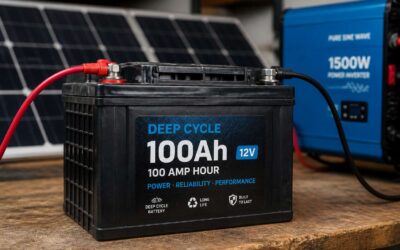
Demand for solar storage in Durban has risen, yet most homeowners and lodge managers still focus on battery capacity numbers rather than real-world endurance. A 12 volt 100ah deep cycle battery durban can keep a security system alive through a two-hour outage, or sustain a small fridge overnight with ease. That changes how people plan their evenings!
For lodges, the priority structure is different. Guests expect hot water, lights, and connectivity, but the biggest drain is often the water pump and entertainment systems. Deep cycle batteries provide the steady discharge needed for these daily patterns. For homes, the priority is protecting food and maintaining basic comfort.
Common setups for lodges and homes include:
– LED lighting circuits for common areas and bedrooms
– Wi-Fi routers, DSTV decoders, and laptop charging stations
– Electric fence and alarm systems during outages
These loads are small individually, but they add up. Solar installers across Durban rely on this battery format because it fits existing inverter setups without requiring complex wiring.
Marine and Fishing Trips off Durban’s Coast
Take any charter boat out of Durban’s harbor and the 12 volt 100ah deep cycle battery durban becomes the quiet workhorse. Trolling motors draw steady current for hours. Fish finders and GPS units run without interruption. The bait pump keeps the livewell bubbling while the crew works the banks beyond the Bluff.
A single battery carries these loads across a full day’s outing, then recharges from a standard shore connection overnight. Anglers who chase the sardine run know the rhythm. A drained battery ends the trip early.
On board, the typical Durban fishing rig draws from one source for:
- electric trolling motors
- depth sounders and chart plotters
- VHF radios and navigation lights
Caravanning and Overlanding in KwaZulu-Natal
There is a peculiar satisfaction in pulling off the N3 near Mooi River with the kettle already boiling, powered entirely by a 12 volt 100ah deep cycle battery durban. The caravan park crowd nods with approval. They know the difference between a battery that survives the weekend and one that merely tolerates it.
For overlanders crossing into the wilds of northern KwaZulu-Natal, the demands multiply. A single deep cycle battery handles:
- the 12V fridge keeping the braai meat cold
- LED lighting for evening card games
- USB charging for phones and cameras
- the occasional electric blanket for those cold Berg nights
That is the quiet triumph of a proper setup. You wake up in the middle of nowhere, the birds are loud, and the coffee is hot. No generator noise, no campsite power point required. That single battery earns its place quietly, proving itself at dawn when the mist sits low over the valley.
Backup Power for Small Businesses and Shops
In Durban, a shopkeeper without backup power is running a gamble. One extended outage can empty the cold chain, spoil stock, and turn away customers. A single 12 volt 100ah deep cycle battery durban changes that equation quietly, sitting in a corner and powering the essentials when Eskom cuts out. For a small business, the demands are modest but non negotiable.
- The card machine for payments
- The till or register
- Security cameras and alarm system
- A few LED lights in the windows
I have seen a small deli run an entire evening load shedding session on one of these batteries. The owner swears by it! The fridge holds its temperature, the shop stays lit, and the customers barely notice the grid is down. That is the real value. It is not about running everything. It is about keeping the doors open and the stock safe.
Electric Fencing and Agricultural Use in Surrounding Areas
Out in the green belt beyond Durban’s suburbs, electric fencing runs on the same quiet workhorse. A 12 volt 100ah deep cycle battery durban keeps energizers pulsing when the grid drops, which happens far more often in rural areas than the city. The loads are modest but constant, and the consequences of silence are heavy.
These batteries typically feed:
- Fence energizers for livestock and game
- Gate motors and access control
- Water pump controllers
- Night security lights around sheds and kraals
These draw steady current, not sudden spikes. A deep cycle battery delivers that without strain. I have watched a small farm in Hillcrest run a full weekend rotation on one charge. The fence holds, the stock stays put, and nobody loses sleep. For the farmer, an unpowered fence is just wire. A powered one is protection. The battery sits there, unglamorous, doing the job.
Where to Source Quality Deep Cycle Batteries in Durban
Trusted Battery Retailers in the City Centre
In Durban’s humid embrace, a failing battery often announces itself at the worst moment. The city centre holds several suppliers who understand this urgency. I have found that reputable retailers on Point Road and around the Workshop complex offer genuine stock with proper warranty registration.
The hunt for a 12 volt 100ah deep cycle battery durban homes depend on often begins in these crowded storefronts. A unit left on a shelf for months loses capacity before it ever powers an inverter.
Signals of a serious dealer include:
- A visible load tester in use
- Stock rotation records
- Manufacturers’ warranty cards
The best CBD outlets deliver to surrounding suburbs, a necessity during load shedding. Their technicians carry the weight of local experience, which proves invaluable after the sale.
Specialist Solar and Renewable Energy Suppliers
Durban’s solar installers and renewable energy specialists form a separate supply chain from general battery retailers. These suppliers test every 12 volt 100ah deep cycle battery durban residents receive against the specific demands of inverter systems and solar charge controllers.
- Pre delivery capacity testing with documented results
- System design assistance for your exact load profile
- Access to manufacturer technical support channels
The distinction matters because solar applications expose weak cells quickly, and I have seen batteries fail within months when paired with mismatched charge controllers. Renewables specialists along the M4 corridor stock units sized for Durban’s humidity.
Online Stores with Fast Durban Delivery
The online marketplace in Durban has matured considerably. Buying a 12 volt 100ah deep cycle battery durban through ecommerce platforms now offers verification that physical stores sometimes miss. Look for sellers who display batch numbers, manufacturing dates, and internal resistance readings before checkout.
Fast Durban delivery matters less than proper handling. A dropped battery can develop micro-cracks in the casing that only appear months later. Reputable online suppliers use foam-lined packaging and designated couriers who understand the weight distribution of lead-acid units.
Consider these markers of a reliable online source:
- Transparent warranty terms that specify handling fees
- Live stock levels tied to actual Durban warehouses
- Returns policies that account for courier damage
Some platforms now offer same-day delivery slots if you order before noon. The convenience is real, but verify the seller’s physical address first. A street address in the city centre or an established industrial park signals more reliability than a PO box alone.
What to Check Before Buying a ‘New’ Battery
Buying a 12 volt 100ah deep cycle battery durban requires more than a glance at the price tag. The date stamp on the casing is the first clue I examine. Lead-acid cells begin ageing from the moment they are assembled, even if never connected to a load.
Ask the seller to demonstrate a voltage reading straight from the shelf. A resting voltage below 12.6 volts means the unit has sat idle too long or suffered from poor storage conditions. Inspect the terminals for white powdery residue, which signals humidity damage already taking hold inside.
- Verify the batch number matches the box and the warranty card
- Request a hydrometer test on each accessible cell
- Ensure the invoice records the serial number for future claims
Established Durban suppliers will happily run through these checks. When you pay for a 12 volt 100ah deep cycle battery durban, the verified history should be part of the deal. A seller who hesitates likely has a reason to hide the truth about that battery’s journey.
Warranty and After-Sales Support in Durban
Finding a dependable source for a 12 volt 100ah deep cycle battery durban means looking beyond the city centre retailers. The industrial corridor along South Coast Road and the specialist suppliers in Springfield Park carry stock that has been cycled and tested. I always ask about the batch origin before handing over payment.
Warranty terms in Durban vary significantly between importers. A twelve month warranty is standard, but the quality of after-sales support separates a genuine supplier from a middleman. Check whether the warranty covers replacement or only pro rata credit. Some suppliers arrange load testing on the spot and log the serial number into their system.
- Confirm the warranty period in writing
- Ask whether labour or delivery fees apply
- Keep the original invoice with the serial number visible
Deal directly with an authorised distributor for the brand you choose. The local agent has the testing equipment and the accountability to honour a claim when a 12 volt 100ah deep cycle battery durban fails inside its service life.
Maintenance and Safety Tips for Durban Battery Owners
Cleaning Corrosion from Terminals and Trays
Corrosion on battery terminals is not a matter of if, but when. In Durban’s coastal humidity, that white or bluish crust forms faster than you might expect. I have seen it eat through cable clamps in under a year when left unchecked.
Cleaning the terminals requires more than a quick wipe. A bicarbonate of soda and distilled water mix neutralises the acid, but the real trick is protecting the metal afterwards. Petroleum jelly or terminal grease keeps oxygen and salt air at bay. Do not forget the tray beneath the battery. Acid seepage pools there and corrodes the metal frame, which can lead to dangerous structural weakness. For a 12 volt 100ah deep cycle battery durban owners trust for backup power, inspect this area every three months.
- Disconnect the negative terminal first to avoid sparks.
- Scrub with a wire brush, then rinse with clean water.
- Dry thoroughly before reapplying protective grease.
Heavy deposits may require fine sandpaper to reveal bare metal. A clean contact surface reduces resistance and prevents heat build-up during charging cycles.
Ventilation and Mounting in Humid Environments
Ventilation requires attention. In Durban’s humidity, a sealed enclosure can trap heat and hydrogen gas. That combination degrades the 12 volt 100ah deep cycle battery durban owners depend on for load shedding. I advise leaving at least 10 cm of clearance around the battery case. This allows airflow to dissipate heat and prevents condensation from pooling on the terminals.
Mounting matters equally for a 12 volt 100ah deep cycle battery durban. A loose battery rattles on Durban’s uneven roads, which can crack the internal plates. Secure the battery with a sturdy bracket or hold-down clamp. Use a rubber mat or vibration pad underneath to absorb shock. Tilt the tray slightly or ensure drainage holes so moisture doesn’t sit beneath the casing.
For humid environments, follow these checks:
- Ensure the battery compartment has vents or louvres.
- Check mounting bolts every month for corrosion.
- Lift the battery to inspect for moisture underneath.
Using Smart Chargers to Prolong Battery Life
Smart chargers regulate the charging current based on the battery’s internal state. This matters for a 12 volt 100ah deep cycle battery durban because Durban’s heat accelerates electrolyte evaporation. A fixed current charger pushes too much voltage into a warm battery, causing the plates to shed active material. The smart charger drops to float mode once full, so the battery stays topped up without boiling the electrolyte. That directly extends cycle life.
Safety requires clean connections and correct charger sizing. Loose terminals on a 12 volt 100ah deep cycle battery durban can arc and ignite hydrogen gas.
- Clean the terminals with a wire brush before connecting
- Match the charger profile to the battery chemistry
- Mount the charger away from direct sunlight
Check the charger leads for cracks. A damaged sheath exposes copper wire and creates a short circuit risk.
Safe Disposal and Recycling Options in eThekwini
Every 12 volt 100ah deep cycle battery durban eventually reaches its end. How you retire that unit matters as much as how you kept it alive. Secure the battery in its tray. A loose block vibrates and cracks the internal plates. Use insulated spanners when working on the posts. The electrolyte can burn bare skin within seconds. Keep bicarbonate soda nearby to neutralise spills.
In eThekwini, illegal dumping poisons stormwater and soil. Take spent units to the Burman Bush drop-off or the Mariannhill landfill’s hazardous waste section. Many Durban battery retailers accept old units without charge. Before you hand them over, tape the terminals with electrical tape. Wrap the battery in a plastic bag. That simple step prevents short circuits during the trip.
Signs Your Deep Cycle Battery Needs Replacement
A 12 volt 100ah deep cycle battery durban rarely expires without sending signals. The trick is interpreting those signs before a load shedding night becomes completely silent.
For a 12 volt 100ah deep cycle battery durban, check the case for bulges or cracks. A swollen case means excess gas pressure from overvoltage. Feel the terminal bolts. If they wiggle with a gloved hand, they need torquing to spec. Loose lugs cause resistance, heat, and eventually a dead unit.
When you notice the following, start planning for a replacement:
- Voltage drops below 10.5 volts under a known load while the battery is rested.
- Water consumption rises sharply for flooded units, signalling plate degradation.
- Charge times shrink dramatically, then the battery sits fully charged for only an hour.
In my experience, these signs often appear together. Do not wait for that failure during a load shedding schedule!

0 Comments