Understanding Group 31 Deep Cycle Batteries
What Is a Group 31 Battery?
A single Group 31 battery can weigh over 30 kilograms, yet its real weight lies in the energy it stores. In South Africa, where off-grid solar systems and caravanning are commonplace, this format demands attention!
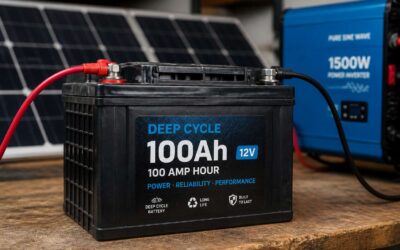
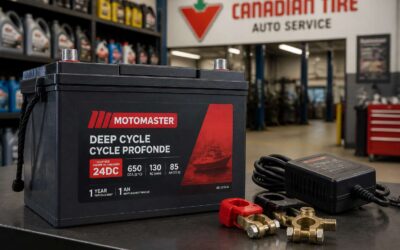
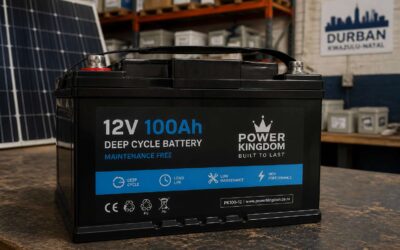
A deep cycle battery group 31 is a standardized unit, often lead acid or lithium, measuring roughly 13 inches by 6.8 inches by 9.4 inches. The BCI designation guarantees mechanical fit, but chemistry determines resilience. These batteries endure deep discharges without the structural damage that plagues starter batteries. I have seen many installers confuse cranking power with cycling capacity. To clarify:
- Terminal types vary, from automotive posts to bolt on studs.
- Capacities range from 100 to 120 amp hours.
- Weight frequently exceeds 30 kilograms.
That physical heft represents thick lead plates. Group 31 units deliver steady current over prolonged periods, which defines a deep cycle battery group 31.
Deep Cycle vs. Starter Batteries
A starter battery releases its energy in one furious burst, then requires immediate recharging. A deep cycle battery group 31 behaves differently, releasing current at a measured tempo across many hours. The internal plates explain the difference. Starter units pack many thin plates for maximum surface area. Deep cycle units use fewer, thicker plates that withstand the physical strain of repeated depletion. This construction allows a deep cycle battery group 31 to survive off-grid solar duty that ruins automotive batteries within months.
- Thin plates favour cranking bursts
- Thick plates favour sustained discharge
- Deep cycling tolerance separates the chemistries
South African installers who pair solar arrays with starter batteries learn this lesson through expensive failures.
Common Construction Types (Flooded, AGM, Gel)
When selecting a deep cycle battery group 31, the internal chemistry matters more than the terminal layout. You will encounter three main construction types. Flooded units remain the workhorse, offering a low upfront cost but demanding regular water top-ups and proper ventilation. AGM technology seals the electrolyte in fibreglass mats, resisting vibration and permitting safe installation inside a vehicle or cabin.
Gel batteries use a silica-based electrolyte, and they handle deep discharges exceptionally well, though they require a slower charging profile. In my experience, your choice hinges on your specific off-grid setup. For instance:
- Choose flooded for stationary, ventilated battery rooms.
- Select AGM for caravan and marine applications.
- Opt for Gel in high-temperature South African environments.
Each construction type alters how a deep cycle battery group 31 performs under cyclic load. Matching the technology to your charger and daily discharge pattern prevents premature failure.
Critical Specifications and Sizing
Dimensions and Terminal Layout
Group 31 batteries pack serious punch. Most weigh over 55 kilograms. That weight tells you something about their lead content and durability. When I measure a deep cycle battery group 31, I expect a length of 330 mm, width of 173 mm, and height of 240 mm. These figures vary slightly by manufacturer. Always verify against your tray.
Terminal layout matters as much as physical size. Most Group 31 units use automotive posts or threaded studs. Studs handle high torque without corrosion. You will see both top and side terminals. Choose based on your cable connectors.
Key specs to check:
- Amp hour rating: typically 100 to 110 Ah
- Reserve capacity: around 200 minutes
- Voltage: 12V standard
This battery fits many South African bakkies and 4x4s. Measure twice. Buy once!
Voltage and Capacity Ratings (Ah)
The raw energy stored inside a deep cycle battery group 31 rarely matches the printed label. A 100Ah rating translates to 1,200 watt-hours, but drawing the full 100 amps for an hour is impossible. That discharge rate triggers the Peukert effect, clawing back real capacity. I always look at the 20-hour rate to gauge true performance.
Voltage specs deserve equal scrutiny. A nominal 12V system sits at 12.7 volts when resting. Under a heavy inverter load, you might see 11.9 volts. That is normal!
- Check the amp hour rating at the 20-hour discharge rate.
- Confirm the charging voltage range matches your alternator.
Choose your voltage and capacity based on your daily draw. Over-speccing adds weight; under-speccing shortens the battery’s life. For a South African overlander, a 105Ah deep cycle battery group 31 offers a reliable middle ground.
Weight and Power-to-Weight Ratio
Weight is a physical burden on every overlanding rig. A deep cycle battery group 31 typically weighs between 25 and 32 kilograms, depending on construction. Flooded units sit at the lighter end, while AGM variants add mass for the glass mat internals. That difference matters when you are already carrying water, recovery gear, and a fridge. I calculate power-to-weight ratio as usable watt-hours divided by total battery weight. A 105Ah AGM delivering 1,260 watt-hours at 28 kilograms gives you 45 watt-hours per kilogram. A cheaper flooded unit might offer the same capacity at 26 kilograms, which sounds better until you factor in the reduced cycle life. For a dual battery setup, the weight doubles. Mounting position changes your vehicle’s centre of gravity. Consider the following:
- Check your vehicle’s payload rating before adding a second deep cycle battery group 31.
- Measure the available tray space; group 31 cases vary by a few millimetres between brands.
That extra kilogram in AGM buys you vibration resistance and faster recharge times. Sizing a deep cycle battery group 31 is a trade-off between endurance and handling.
Cold Cranking Amps vs. Reserve Capacity
Cold Cranking Amps and Reserve Capacity answer different questions. CCA tells you if a battery can start a frozen engine. Reserve Capacity tells you how long a deep cycle battery group 31 will feed a load. For overlanding, RC dominates.
Manufacturers test them differently. CCA is a 30 second burst at -18°C. RC is a continuous discharge at 25 amps until voltage drops to 10.5V. That continuous rating maps directly to your fridge and camp lights. A typical deep cycle battery group 31 offers 200 minutes RC, equalling 3.3 hours at 25 amps.
Spec sheet traps to spot:
- RC sometimes comes from a lower amperage test, like 15 amps, inflating the minutes.
- CCA ratings vary between standards, so 900 CCA may not match another brand’s 800.
- Ah capacity is an estimate; RC is a measured number.
That contrast is why CCA rarely influences overlanding decisions.
Selecting the Right Group 31 for Your Needs
Matching Battery to Your Energy Demands
Ask any Capetonian about their week, and you will hear less about the weather and more about the load-shedding schedule. That schedule dictates your real energy demands, not the spec sheet. Selecting the right deep cycle battery group 31 requires you to tabulate your daily draw in watt-hours, then account for inverter losses and a reasonable depth of discharge. A battery that suits a weekend caravan park will embarrass a suburban home, and the reverse will waste your budget.
Consider your typical evening:
- a fridge cycling for eight hours,
- four LED bulbs for six hours,
- and a router that stays on.
Sum those watt-hours, divide by your system voltage, and you arrive at the ampere-hours needed. Choose a model that comfortably exceeds that figure to avoid perpetual undercharging. Socially, this decision is private, but its failure is public, as every neighbour will hear your generator.
Cycle Life and Depth of Discharge
Selecting the right deep cycle battery group 31 hinges on cycle life and depth of discharge. Depth of discharge, or DoD, is the percentage of capacity used before recharging. A battery drained to 50% each cycle typically delivers twice as many cycles as one drained to 80%. This relationship is fixed.
Your evening routine decides which battery you need. A router and a few LEDs might pull only 10% of capacity overnight. That shallow draw gives you thousands of cycles. Run a kettle and a microwave off the same battery, and you will push past 60% DoD, cutting cycle life dramatically. Cape Town’s heat accelerates the damage.
A deep cycle battery group 31 with a high cycle rating at 50% DoD will outlast a cheap unit rated at 30% DoD. The difference appears in replacement frequency.
Temperature Tolerance and Climate
North West province routinely hits 40°C in January. That heat accelerates grid corrosion and water loss inside any deep cycle battery group 31. The reverse happens in Sutherland’s winter, where capacity drops and charge acceptance weakens. South Africa’s climate varies widely, so your location dictates which battery survives.
Temperature tolerance comes from internal design, not case material alone. Thicker plates and a denser electrolyte handle heat better. Enclosed compartments trap heat, so mounting position matters.
Relevant climate factors include:
- Peak summer temperature
- Humidity levels, which drive terminal corrosion
- Overnight temperature swings
A battery rated for 45°C environments costs more but delivers reliable power in Musina. Paying that premium avoids premature failure.
Brand and Price Considerations
Most battery failures trace back to a poor buying decision. When you need a deep cycle battery group 31, brand and price determine longevity more than any spec sheet. Established South African brands offer proven warranty support. Imported no-name units cost less upfront, but their cycle life often disappoints.
Consider these factors before spending:
- Warranty terms and claim process
- Local service centres and stock availability
- Actual tested capacity, not advertised numbers
A premium unit from a reputable manufacturer may cost 30% more. That gap buys thicker plates and stricter quality control. In remote areas like Upington or Polokwane, a failed battery means expensive downtime. Paying for reliability is not a luxury; it is a calculation.
Installation and Wiring Best Practices
Proper Mounting and Ventilation
Proper installation separates a dependable battery from a recurring expense. In South African conditions, vibration and heat are the enemies. Mount a deep cycle battery group 31 in a rigid tray with a hold-down bracket, never resting it directly on metal. Ventilation is nonnegotiable for flooded types; charging releases hydrogen gas, so an airtight box invites pressure buildup. For wiring, match cable gauge to your inverter’s amperage and tighten terminals to spec, not brute force.
- Inspect the case for cracks.
- Confirm vents are clear.
- Pull each connection firmly.
Trust me, these habits keep your system safe for years.
Series vs. Parallel Configurations
Before any cable touches a terminal, the configuration question comes first. A deep cycle battery group 31 is a reliable workhorse, but it will not rewrite the rules of series and parallel wiring. In series, voltages add while amp hours stay fixed. Two 12V batteries become 24V; four become 48V, which is exactly what many South African inverters demand. In parallel, voltage remains 12V and capacity stacks, but that convenience hides a serious consequence.
Parallel banks force every battery to share the load evenly, yet the wiring rarely encourages that. When cables run from one battery to the next in a daisy chain, the first unit carries more current than the last. That imbalance makes one deep cycle battery group 31 age faster than its siblings. The fix is a common busbar connecting each battery with an equal length cable.
Series strings have their own vulnerability. One weak cell breaks the entire chain. A single battery with internal damage will compromise the whole bank during discharge, and during charging it may overcharge or undercharge depending on its resistance.
Keep these rules in view:
- Use batteries of identical brand, age, and cycle history
- Torque terminals to the stated newton meter value
- Place a fuse and an isolator on every positive lead
- Match cable gauge to current, not to physical length of the run
A deep cycle battery group 31 suffers more installation failures than manufacturing failures. Terminals loosened by vibration, cables sized on guesswork, and banks built from mismatched units are the usual culprits. Wire it with the same care you put into the rest of your system, and the battery will carry the load through the dark hours with little fanfare.
Cable Sizing and Torque Specs
Cable sizing is a calculation of resistance, not a guess. A deep cycle battery group 31 demands a conductor that carries peak current without heating. Voltage drop grows with length, so measure the round trip from battery to load. In South African systems, a 50 amp draw over six meters often needs 16 mm² cable. Use the ampacity chart and derate for engine bay heat.
Torque specifications prevent failures that appear months later. Most group 31 stud terminals need 11 to 14 Newton meters. I always use a torque wrench. Hand tightening leaves variable pressure! Loose terminals create micro arcs and corrosion; overtightened posts crack. Every deep cycle battery group 31 suffers more from improper torque than internal defects.
Good connections share three traits:
- Properly crimped lugs
- No exposed strands
- Corrosion inhibitor after final torque
Battery Management Systems
Where a deep cycle battery group 31 truly earns its keep in a South African overlanding rig is under the watch of a battery management system. A BMS is not a luxury anymore. It balances cell voltages, logs charge cycles, and halts discharge at your programmed floor.
Wiring best practices start with a dedicated fuse block within 300 mm of the positive post. Each auxiliary circuit gets its own fuse rating. Keep positive and negative runs twisted together to reduce inductance. Terminal voltage under load tells you more than resting voltage, so pair the system with a shunt based monitor. I prefer a smart BMS that recalibrates the state of charge weekly. That discipline, combined with clean terminations, keeps the deep cycle battery group 31 delivering current without drama.
Maintenance, Charging, and Longevity
Routine Cleaning and Corrosion Prevention
South African dust and humidity cause corrosion on battery terminals. That corrosion raises resistance and drains capacity. I have seen a deep cycle battery group 31 fail because its posts were ignored for a season. The routine is simple, yet most people skip it.
Before anything, disconnect the negative cable first. Then inspect for white or blue powder. A paste of bicarbonate soda and water neutralises the acid residue. Scrub with a stiff brush, rinse with distilled water, and dry thoroughly. The weekly check covers:
- Terminal tightness
- A thin layer of petroleum jelly
- Casing cracks or bulges
Charging demands a disciplined approach. A modern charger with temperature compensation is essential, especially in our heat. Overcharging boils off electrolyte, while undercharging stratifies the acid. For a deep cycle battery group 31, maintain the correct float voltage.
Charging Profiles and State of Charge
Maintenance extends beyond terminal cleaning. Check electrolyte levels monthly in flooded batteries. A hydrometer measures charge state more accurately than voltage alone. Keep a log of readings to spot drift early.
Charging profiles determine battery life. A smart charger applies bulk, absorption, and float stages automatically. Temperature compensation adjusts voltages for our climate. Without it, overcharging cooks the plates or undercharging leaves acid stratified.
State of charge requires vigilance. Below 50% capacity, a deep cycle battery group 31 begins to sulphate. I measure resting voltage after six hours and keep that number as a baseline. These checks matter:
- Record resting voltage weekly
- Inspect electrolyte colour and level
- Confirm vents are clear
For the deep cycle battery group 31, disciplined charging and careful state of charge tracking separate a long service life from a short one.
Storage and Seasonal Care
In the South African winter, the deep cycle battery group 31 stiffens. Electrolyte thickens and internal resistance climbs. A battery left at partial charge through July may not recover. I store mine on a wooden pallet, never directly on concrete. The cold floor accelerates self-discharge and invites parasitic drain.
Before long idle periods, run a full charge and disconnect the negative terminal. Set a smart charger to float. Then, perform the seasonal ritual:
– Inspect electrolyte level without disturbing sediment
– Confirm torque at 11 Nm
– Test capacity under load after each cold spell
This guidance keeps the deep cycle battery group 31 alive through the dormant months.
Signs of Battery Failure
After a cold winter, a South African summer brings its own trials. Heat drives off electrolyte in flooded units. The plates corrode under thermal stress. A deep cycle battery group 31 that survived July can fail by February.
Maintenance means checking fluid levels monthly in hot weather. Top up with distilled water only, never tap water. The minerals in tap water accelerate internal corrosion. Torque the terminals to one setting and leave them there.
Charging matters more in heat. Every 0.5 volt of overcharge boils the electrolyte faster. If the battery smells like rotten eggs, you’ve overdone it.
Signs your deep cycle battery group 31 is finished:
- Swollen case or bulged sides
- Cranking slowly in the morning
- Voltage drops below 12.4 while resting
- Specific gravity reading below 1.265
Tend to these details and you might get a fifth year out of it. Ignore them and you’ll be shopping for a new one sooner.
Recycling and Disposal
Your deep cycle battery group 31 does not care about your weekend plans. It cares about electrolyte levels and charging voltage. In a South African summer, fluid evaporates quickly. Check it monthly and top up with distilled water. Tap water contains minerals that accelerate internal corrosion, a slow failure process.
Charging demands attention. Overcharging boils electrolyte and creates that rotten egg smell. Undercharging causes sulfation. A temperature compensated charger handles both. Set it and let it work. Loose terminals cause resistance, which generates heat, which shortens life. Torque them properly once and leave them. A deep cycle battery group 31 needs this consistency.
Longevity comes down to care. It can last five years with effort, or two without. When it finally gives up, recycle it. Lead acid batteries are largely recyclable. Return the old unit to the supplier. They handle the rest. Do not leave it in the sun.

0 Comments