Understanding Battery Construction Differences
Active Material Composition
Under the bonnet of every vehicle lies a quiet chemical drama, a tradeoff forged in lead and acid. The true distinction in the deep cycle battery vs car battery debate is not merely about capacity, but about the very architecture of the plates. A starting battery demands a sudden, violent surge of power, so its plates are thin and numerous, like the fragile pages of a forbidden tome, offering maximum surface area for a fleeting burst.
Conversely, a deep cycle unit is built for endurance, with thick, dense plates that resist the corrosive wear of repeated discharge. This active material composition is the soul of the battery.
– Car Batteries: Use high-surface-area “sponge” lead for instant power delivery.
– Deep Cycle Batteries: Employ dense, solid lead plates to prevent shedding and extend cycle life.
This fundamental choice determines whether your power source is a sprinter or a marathon runner. The chemical paste within each design is tailored to its fate, ensuring one delivers a spark and the other endures the long, slow drain of the night.
Grid Alloy and Lead Purity
Corrosion inside a lead-acid battery can begin the day you install it. The grid alloy, the metallic lattice that holds the electrochemical paste, dictates how fast that decay progresses. Most South African motorists rarely consider this architecture when weighing deep cycle battery vs car battery choices. Yet the alloy determines resistance to corrosion and the ability to cope with expansion during charge cycles.
Calcium-lead grids dominate starting batteries because they limit water loss and maintain a stable charge while parked. Deep cycle units, by contrast, often rely on antimony alloyed grids:
- Antimony strengthens the grid structure.
- It improves adhesion of the active paste.
- It accepts deeper discharges without grid deformation.
Purity matters as much as alloy chemistry. Trace impurities in lead, such as iron or copper, accelerate self-discharge and shorten service life. Premium deep cycle batteries use higher grade lead, and this becomes a significant factor in the deep cycle battery vs car battery comparison for anyone planning long term ownership.
Electrolyte Density and Accessibility
Electrolyte density separates these two designs more than most buyers expect. A car battery carries acid at a higher specific gravity, often 1.28, to deliver the burst needed for ignition. That same concentration accelerates grid corrosion once the battery is discharged deeply. Deep cycle units run a thinner electrolyte, closer to 1.25, trading some cold cranking power for longer cycle life. That trade matters in the deep cycle battery vs car battery decision.
Accessibility follows this logic, and it deserves attention! In my experience, many deep cycle batteries sold in South Africa remain flooded with removable caps, letting you check acid levels with a hydrometer. Most car batteries, especially maintenance free units, seal the electrolyte away entirely, which complicates any deep cycle battery vs car battery comparison.
- Higher acid density suits short, high current draws.
- Lower density handles repeat discharges.
- Removable caps allow specific gravity checks.
Discharge and Recharge Characteristics
Depth of Discharge Tolerance
Think about the moment you turn the key. A car battery releases a rapid burst, then recharges on the fly. A deep cycle battery, however, drains steadily over hours, powering appliances or trolling motors. That contrast shapes their recharge behavior. Car batteries accept a strong charge quickly from the alternator. Deep cycle batteries need a gentler, staged recharge to prevent overheating.
Depth of discharge tolerance separates them most clearly. Deep cycle units can routinely lose 80% of capacity before recharging. Car batteries suffer irreversible damage when drained past 30%. This is the core of the deep cycle battery vs car battery debate.
- Match the discharge rate to your load’s duration.
- Program recharge voltage to match the chemistry.
- Monitor depth of discharge to preserve cycle life.
Recharge rightly, and either battery honors its design.
Cycle Life at Various Discharge Levels
The deep cycle battery vs car battery comparison gets brutal at cycle life. A car battery rarely sees a full discharge. It delivers ignition bursts, then recharges from the alternator. A deep cycle battery counts on repeated cycles, and every cycle chips away at its lifespan.
A flooded deep cycle battery run to 50% discharge and fully recharged often earns 1,000 to 1,500 cycles. Push it to 80% discharge and you cut that back to around 600, a significant loss for a few extra hours of inverter power.
- At 30% discharge, cycle life can reach 2,500 cycles.
- At 50% discharge, expect roughly 1,100 cycles.
- At 80% discharge, plan for 450 to 650 cycles.
Car batteries simply cannot sustain these numbers. Exceeding a 30% drain damages their plates, and failure appears within weeks, sometimes sooner. The deep cycle battery vs car battery question answers itself once you respect these cycle limits.
Reserve Capacity and Runtime Metrics
Discharge and recharge behaviour separates these batteries further. A cranking battery dumps current in short, violent bursts, then accepts a rapid alternator charge. A deep cycle battery holds voltage steady while loads draw current over hours. The deep cycle battery vs car battery difference in reserve capacity, measured in minutes at 25 amps down to 10.5 volts, quantifies this endurance.
That metric matters for inverters and trolling motors. Check the numbers below!
- Standard car battery: 90 to 120 minutes
- Flooded deep cycle: 180 to 220 minutes
- Premium deep cycle: 240 minutes or more
Recharge patterns diverge too. Deep cycle units handle staged charging, while car batteries demand a quick return to float. Runtime differs: sustained power versus brief starts. The deep cycle battery vs car battery contrast emerges in how long each holds voltage above 12 volts under load.
Cold Cranking Amps vs Amp-Hour Ratings
Cold cranking amps get the glory, but amp hours do the work. A car battery is rated in cold cranking amps: current available at minus 18 degrees Celsius to spin a frozen engine. A deep cycle battery is rated in amp hours: total energy delivered before voltage collapses. Different currencies.
Discharge and recharge characteristics reinforce the split. A car battery discharges in short, violent bursts and accepts a rapid alternator charge. A deep cycle battery drains slowly over hours, holding voltage steady, and demands staged charging. Recharge patterns differ:
- Car batteries want a quick return to float.
- Deep cycle units need bulk, absorption, and float phases.
So the deep cycle battery vs car battery choice depends on matching the rating to the job. A trolling motor needs amp hours, not cold cranking amps. The deep cycle battery vs car battery trade-off is short burst versus long endurance.
Voltage Behavior Under Load
Under load, the voltage behavior of a battery tells the real story of its design. A starting battery holds its voltage above 12 volts only for the brief moments it takes to crank an engine. After that initial surge, the voltage drops quickly once the load exceeds its design capacity. In contrast, a deep cycle battery maintains a flatter voltage curve throughout its discharge. A trolling motor drawing 15 amps will see voltage dip gradually, not plunge. This steady voltage output is why the deep cycle battery vs car battery decision matters for any sustained application.
The recharge response also exposes the core differences. Car batteries accept a high amperage surge from the alternator and return to a full state of charge in minutes. Deep cycle units require a controlled, multi stage process to avoid overheating and warping the plates. The deep cycle battery vs car battery comparison becomes clear when you observe the charging patterns:
– Car batteries: high current, short duration, immediate float voltage
– Deep cycle batteries: bulk charge, absorption phase, then float
A standard alternator will damage a deep cycle battery over time because it skips the absorption phase. This is critical for South African boat owners and caravan enthusiasts who rely on auxiliary power. The deep cycle battery vs car battery choice is not about which is stronger. It is about which can sustain voltage when the alternator stops spinning and the real work begins.
Physical Design and Durability Engineering
Internal Plate Support and Vibration Resistance
Every pothole on the N1 sends a jolt through your battery’s internals. In the deep cycle battery vs car battery debate, this is where physical design matters most. A car battery’s plates are thin and packed tight for quick bursts of cranking current. A deep cycle battery uses thicker plates, but thickness alone fails if those plates are allowed to shift.
Internal plate support is the answer. Deep cycle units often bond the plate block with epoxy or hot-melt adhesives, holding everything in a rigid compression fit. Car batteries rely on envelope separators and accept more flex from engine vibration.
- Thicker plates resist buckling under deep discharge.
- Compression fit stops internal movement on rough roads.
- Heavy-duty separators prevent short circuits when paste sheds.
For South African conditions, gravel roads and corrugated farm tracks punish weak casings. The deep cycle battery vs car battery choice often hinges on whether your battery will sit still or get shaken repeatedly.
Terminal Configuration and Retrofit Considerations
I have watched many a weekend mechanic discover that a deep cycle battery does not slip into the same tray as a car battery. The physical design differs beyond the plates. Deep cycle units use thicker casing walls and reinforced corners to handle thermal cycling, which matters when your engine bay hits 70 degrees Celsius on a Highveld afternoon. Car batteries prioritise weight savings and cranking speed, so their cases flex more.
Terminal configuration adds complexity. Standard SAE posts dominate car batteries, but deep cycle models often come with:
- Threaded studs for secure, vibration resistant connections
- Dual terminals to suit both clamps and ring lugs
- Recessed posts that require longer bolts
Retrofit considerations start with measuring your cable ends. The deep cycle battery vs car battery choice becomes practical when you realise adapters exist, but they add resistance. A clean swap needs the right terminal from the start.
Weight, Footprint, and Venting Requirements
Weight tells you more than any spec sheet. A deep cycle battery vs car battery comparison shows deep cycle units running 15 percent heavier. That extra mass comes from thicker plates and a sturdier case. Car batteries flex under load, deep cycle units hold firm. I have seen engine trays crack when owners force the wrong footprint.
Venting requirements differ sharply. These batteries release hydrogen gas during charge cycles. Deep cycle models demand proper venting because they gas more frequently. Car batteries can get away with open vents, but deep cycle units need tubes.
- Vent port diameters vary between manufacturers
- Tube routing must avoid exhaust heat
- Kinks in the line block airflow completely
That physical difference separates the two from the moment you lift them.
Selecting the Right Battery for These Use Cases
Daily Engine Starting and Cranking Needs
A vehicle that refuses to start on a cold Highveld morning is a harsh teacher. Daily engine starting demands a rapid burst of power, and that demand repeats itself dozens of times each week. Most passenger cars in South Africa rely on a standard starting battery because their alternators replace the spent energy during ordinary journeys. The real challenge arrives when trips become too short or the vehicle carries additional electrical loads.
The deep cycle battery vs car battery debate becomes practical for drivers who push their vehicles beyond factory conditions. Think of a bakkie used for both commuting and weekend camping, or a delivery vehicle that idles between stops. These use patterns drain energy faster than the alternator can replenish during a brief drive.
- Short daily commutes under fifteen minutes
- Accessories such as fridges, inverters, or auxiliary lights
- Frequent engine restarts in traffic or during work shifts
Each of these scenarios shifts the cranking requirement. The deep cycle battery vs car battery selection then depends on how much recovery time your driving routine actually provides.
Auxiliary Power for Trolling Motors and RV Systems
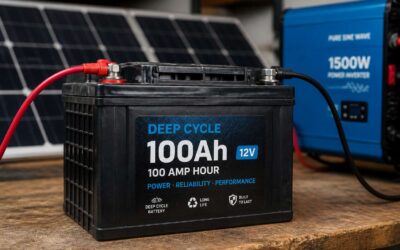
A trolling motor drawing 30 amps will drain a car battery within an hour. For RV systems, the math worsens. The deep cycle battery vs car battery decision turns on sustained discharge, not a two second starting burst. A car battery delivers a rapid jolt to crank an engine, then relies on the alternator to refill it. A trolling motor or fridge draws current for hours. Those sustained loads punish a starting battery.
Deep cycle batteries tolerate repeated discharges down to fifty percent or lower. They reduce cranking power for endurance. When selecting the right battery for auxiliary power, you compare the deep cycle battery vs car battery on runtime and recharge behavior, not cold start performance.
Look at three numbers before buying:
- The amp draw of your trolling motor at normal throttle
- The total wattage of your RV appliances
- The hours you plan to run everything without shore power
Solar, Wind, and Off-Grid Energy Storage Demands
The off-grid array behaves differently from an auxiliary load. Solar and wind generation flows in bursts and lulls. When the sun slips behind the koppie or the wind drops, the battery bank carries the entire household. The deep cycle battery vs car battery decision rests on one metric above all: how many kilowatt-hours the bank can cycle each day without structural fatigue.
Solar and wind systems also demand resilience against partial state of charge operation. A car battery delivered a quick start and then received a steady top-up. Off-grid batteries often sit at eighty percent charge for months, absorbing whatever renewable energy happens to arrive. That intermittent charging pattern corrodes a starting battery’s positive grids far faster than any highway commute.
When you compare the deep cycle battery vs car battery for energy storage, look at daily throughput, charge acceptance, and tolerance for irregular voltage input. The starting battery simply was not built for that life.
Dual-Purpose Batteries as a Middle-Ground Option
The real test arrives when one battery must start an engine and then power the campsite for two days. A deep cycle battery vs car battery comparison usually forces a choice, but dual-purpose options blur that line.
These hybrids use thicker plates than a cranking battery yet maintain enough surface area to kick over a motor. They cannot match the daily throughput of a true deep cycle unit, and they will not spin a large diesel like a dedicated starter.
- Expect around half the cycle life of a deep cycle battery under regular discharge
- Expect roughly seventy five percent of a starting battery’s cold cranking punch
For moderate draw, say a 40 litre fridge plus LED lighting, this compromise often makes sense.
Potential Safety Risks of Improper Substitution
Selecting the right battery means matching the plate design to your actual load, not the one you wish you had. For a weekend camping trip with a 40 litre fridge, the deep cycle battery vs car battery choice favours the former. For daily town driving, the latter wins every time.
Improper substitution introduces real hazards. A car battery deeply discharged will suffer internal damage and might release hydrogen gas when recharged. Worse, mixing battery types in a dual battery system can cause overcharging or undercharging. Do not do this:
- Never replace a deep cycle battery with a car battery in a solar setup.
- Never install a deep cycle battery under the bonnet without checking alternator output.
Long-Term Maintenance, Costs, and Replacement Pathways
Watering, Cleaning, and Corrosion Management
The deep cycle battery vs car battery distinction reveals itself in maintenance, where my hands have learned the difference. A car battery sits sealed, almost indifferent. Deep cycle units, especially flooded ones, demand watering every few weeks, or their plates dry into sediment. I clean terminals as a defence against corrosion, that chalky efflorescence which gnaws at conductivity. The costs of neglect are not immediate, but they compound. Replacement pathways open when restorative care fails, a decision I weigh by voltage stability rather than age. Consider these habits:
- Top up with distilled water after charging, never before.
- Neutralise corrosion with a bicarbonate solution.
- Inspect for bulging cases, a harbinger of early death.
The deep cycle battery vs car battery choice, once made, binds you to this cycle of vigilance.
Equalization Charging and Storage Practices
The external routines of cleaning and watering only address the surface, the visible ledger of battery health. A deeper, more demanding discipline governs the internal life of these power stores: equalization charging. This is a controlled, deliberate overcharge, a slow boil designed to dissolve the sulfate crystals that strangle capacity over time. It is a ritual performed only on flooded deep cycle batteries, usually every few months, and never on a standard car battery, whose sealed case cannot tolerate the gas release.
This internal care shapes the true cost of ownership. The initial purchase price for a deep cycle unit is steeper, but its ability to be repeatedly drained and refilled without fracture means its financial burden is spread across years of service characterized by daily discharge and recharge. A car battery, by contrast, asks for a small price upfront but gives little back beyond its cranking duty. The real expense emerges in the replacement pathway, a decision dictated by voltage behavior under a sustained load. A rested battery showing a surface charge above 12.6 volts can still falter when asked to deliver steady amps. Pay attention to the vocal tremor of a voltage meter under load, not the quiet confidence of an idle readout. If the voltage collapses quickly, the internal grid has decayed, and no amount of charging will resurrect it.
Storage in the South African climate presents its own trials. A battery left dormant for a month in high heat self-discharges faster than one in a cool garage. The practice is simple: maintain a full state of charge, and apply a periodic equalization charge to a flooded unit to keep the electrolyte stratified. For long periods of inactivity, connect a maintenance charger that cycles on and off. This vigilance will delay the inevitable replacement pathway. A deep cycle battery vs car battery analysis shows that while both perish, the deep cycle unit rewards the owner who treats its internals with the same care as its terminals.
Typical Service Life in Different Applications
In South Africa, the real cost of a battery reveals itself only after years of service. The deep cycle battery vs car battery choice shapes that timeline. A car battery designed for brief cranking bursts may survive three to five years in a daily commuter, while a solar array’s deep cycle unit often exceeds eight years of daily charge and discharge. Application dictates everything.
- Car starting in moderate climate: 4 years on average.
- Trolling motor on a fishing boat: 3 years with consistent charging habits.
- Off-grid home storage: 8 to 10 years with a quality charge controller.
Maintenance costs follow the same pattern. A cranking battery demands little attention but fails suddenly, forcing an immediate replacement pathway. A deep cycle unit asks for periodic capacity testing and thermal management, yet its gradual decline gives you time to plan. The deep cycle battery vs car battery decision still depends on how many cycles you truly need.

0 Comments